What are the successful strategies to grow and thrive in a context of decline?
Most established churches, including the Church of Norway are struggling with declining church membership and service attendance. How do its congregations try to cope with this situation? What are successful strategies to grow and thrive in this context? Interestingly, in some cases, white middle class members leave their local Lutheran congregations to affiliate with Pentecostal congregations (e.g. Hillsong). Contrasting Norwegian class behavior, middle class Pentecostals in Latin America show off their class belonging in public church situations. While they signal their middle class status in public, they engage in “lower class” practices (e.g. speaking in tongues, exorcisms) in more private religious settings. In this way, they constantly change their religious behavior depending on whether they move in public (e.g. open church services) or more private situations (e.g. small church groups) in their congregations. What drives these class dynamics and makes them so different from those of Norway?
Is it time for religious communities to leave social media?
Social media have become part of the everyday of most people, influencing every field of social interaction. Hardly any institution can afford not to try to make themselves visible and popular at social media platforms. The majority churches in Scandinavia have used substantial resources on building up social media infrastructure. Yet, scandals related to privacy regulations are a constant reminder about social media as governed by a commercial and algorithmic media logic. How does social media logic shape conditions and rules for core activities within the churches, such as preaching, religious authority and pastoral care? Is it time for religious communities to leave Facebook, and other social media?
Do religious organizations make a difference in sustainable development?
Scholarship in development studies increasingly perceives religious organizations as change agents for reaching the sustainable development goals. Arguably religious groups are much better in making societal change happening than development NGOs and other actors. But are religious organizations really making a difference when it comes to sustainable development? Are religious organizations better equipped to advance s change in society than development NGOs and other organizations (e.g. public administrations, businesses)?
Interactive and informal atmosphere
In order to generate an interactive and informal atmosphere, we will engage in interviews with authors, “author meets critics”-sessions, and discussions with the audience. At the end, there will be a reception with some light food and drinks open to all participants.
We hope to see many colleagues, friends, students and others interested. Everyone is welcome!
Registration
Program of the symposium
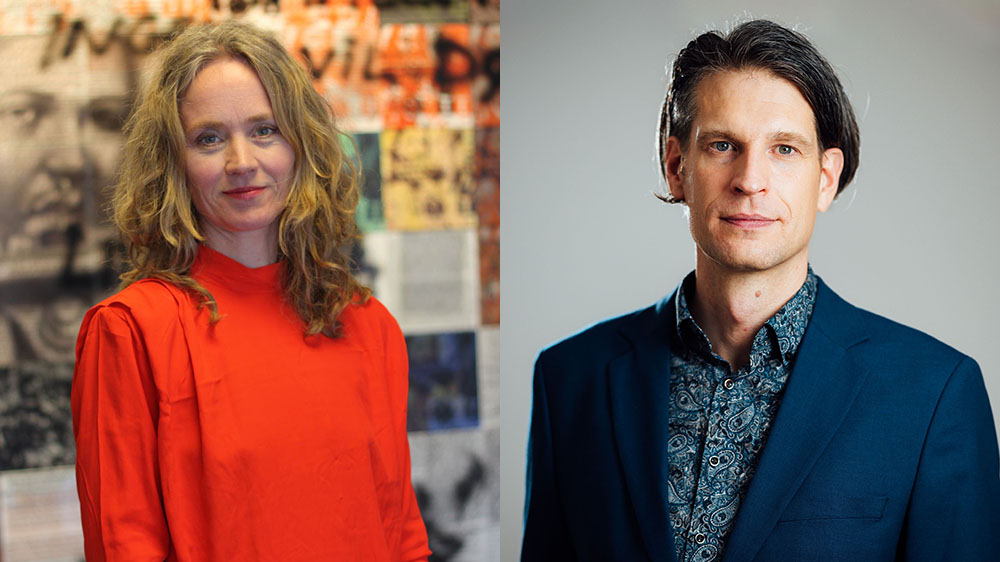
14:00-14:45 The new professors interviewing each other
Convener: Nina Hoel
- Welcome by Nina Hoel (5 minutes)
- “Growth in a context of decline: Congregations in processes of change”: Interview of Elisabeth Tveito Johnsen by Jens Koehrsen (10 minutes)
- “From the “What” and “How” to the “Where”: Distinction as a Matter of Place”: Interview of Jens Koehrsen by Elisabeth Tveito Johnsen (10 minutes)
- Open discussion (15 minutes)
14:45-15:00 Break
15:00-15:45 Author meets critics
Convener: Birgitte Lerheim
- “Religion and Development: Alternative Visions, Credibility, and Networks as Religious Assets for Sustainable Development?”
- Summary and comments by Andrea Rota, IKOS, UiO (7 minutes)
- Comments by Marius Mjaaland, TF (3-5 minutes)
- Response by Jens Koehrsen
- Open discussion
- “Understanding Facebook as infrastructure. How does social media logic shape preaching, church leadership and pastoral care?” Summary and comments by Tone Kaufmann, MF (7 minutes)
- Comments by Sven Thore Kloster, KIFO (3-5 minutes)
- Response by Elisabeth Tveito Johnsen
- Open discussion
15:45-16:00 Break
16:00-16:45 Third session: What are you currently working on? What comes next?
Convener: Halvard Johannessen
- What are the implications of post-colonial theory on practical theological research? How to avoid the construction of stereotypes about white racists? By Elisabeth Tveito Johnsen (10 minutes)
- Questions from audience
- How do ecovillages diffuse their innovations to broader society in Latin America? And in what ways does religion play a role for that? by Jens Koehrsen (10 minutes)
- Questions from audience
16:45 Reception
References for the academic articles that will be discussed
Full references for the academic articles that will be discussed
- Johnsen, Elisabeth Tveito (2020) “Growth in a context of decline. Congregations in processes of change”, in: Studia Theologica - Nordic Journal of Theology. doi: 10.1080/0039338X.2020.1867635
- Johnsen, Elisabeth Tveito (2024), “Understanding Facebook as infrastructure. How does social media logic shape preaching, church leadership and pastoral care?” In: Öffentlich Pfarrerin sein – Zur medialen Formatierung religiöser Kommunikation. Edited by: Lea Stolz and Birgit Weyel. Stuttgart, Kohlhammer.
- Koehrsen, Jens (2019) “From the “What” and “How” to the “Where”: Distinction as a Matter of Place”, in: Cultural Sociology 13 (1), p. 76–92; doi: 10.1177/1749975518819669
- Koehrsen, Jens; Burchardt, Marian (2024) “Religion and Development: Alternative Visions, Credibility, and Networks as Religious Assets for Sustainable Development?”, in: Progress in Development Studies 24 (2), p. 129-146, doi: 10.1177/14649934231206302